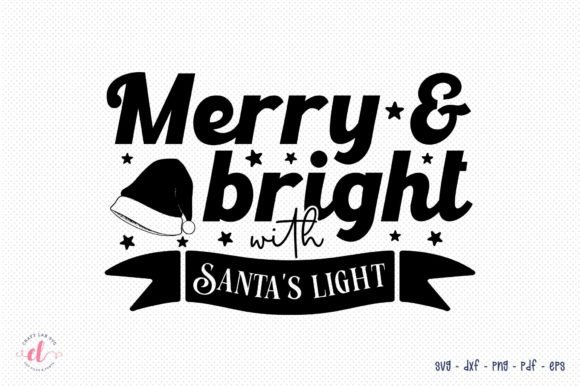
Merry Bright with Santa’s Light SVG
First Impression: Warm, Whimsical, and Ready for Real Stitching
Opening Merry Bright with Santa’s Light SVG feels like unwrapping a well-chosen holiday card—friendly, nostalgic, and intentionally cheerful. It’s not overly detailed or fussy; instead, it leans into clean silhouette work, balanced lettering, and a gentle Santa motif that reads clearly at medium scale. The phrase “Merry Bright” sits above a soft, stylized Santa holding a glowing lantern—no tiny bells, no intricate beard texture, no floating snowflakes cluttering the edges. That restraint is a strength. As an embroidery designer who’s stitched hundreds of holiday files, I immediately saw how this would translate: minimal re-hooping, predictable stitch flow, and strong visual impact on everything from a baby onesie to a linen tea towel.
A Real-World Test: Embroidering This on a Natural Linen Tote Bag
Last week, I prepped a batch of natural unbleached linen tote bags for a local boutique’s holiday pop-up. I chose Merry Bright with Santa’s Light SVG for the front panel—not as a centerpiece, but as a warm, understated statement. At 4.5 inches wide, it sat comfortably in a standard 5×7 hoop. With medium-weight cutaway stabilizer and 40-weight polyester thread in deep forest green and warm ivory, the satin-stitched Santa outline held crisp shape, while the fill-stitched text stayed dense without puckering. Customers responded instantly—not just to the sentiment, but to how *finished* it looked. No one asked, “Is that printed?” They touched the texture, smiled, and reached for their wallets. That’s the quiet power of a design built for real fabric, not just screen display.
Where It Shines (and Where It Needs Care)
Merry Bright with Santa’s Light SVG performs especially well for:
- Custom apparel: Sweatshirts and hoodies—especially lighter-weight fleece—show off its balanced proportions without distortion.
- Tote bag design and pillow covers: The open negative space around Santa’s lantern lets fabric breathe, avoiding stiffness.
- Baby embroidery and nursery decor: Its gentle scale and lack of sharp angles make it ideal for onesies, burp cloths, and crib banners.
- Embroidered patch creation: Clean outer edges mean clean cut-away results—even when fused to twill or denim.
- Holiday embroidery for small shop products: It reads clearly in product photos and printable mockups, helping Etsy sellers build cohesive branding across listings.
But here’s where attention matters:
- Small hoop sizes (<5×7"): Avoid shrinking below 3.75". Tiny lettering loses legibility, and the lantern detail starts to blur in fill stitch.
- Textured fabrics (like bouclé or heavy terry): The design’s openness helps—but test stitch density first. Too much fill can drown subtle contours.
- Stretchy fabric (e.g., jersey tees): Use tear-away + light cutaway stabilizer combo, and consider simplifying inner details if your machine struggles with fine transitions.
- Dark fabric: The original SVG likely assumes light backgrounds. For navy or charcoal, reverse-engineer contrast—try white thread with gray shadow satin stitch, or add a subtle backing layer in your embroidery software.
- Curved surfaces (caps, beanies): The Santa figure’s vertical orientation works, but avoid placing it too close to the crown seam—distortion creeps in fast.
What It Adds to Your Finished Product—Beyond Aesthetics
This isn’t just decoration—it quietly elevates perception. A sweatshirt with Merry Bright with Santa’s Light SVG feels more considered than one with generic script. Why? Because the balance between figure and phrase suggests intentionality. Customers associate that with handmade quality and care—key for Etsy sellers and craft fair vendors. For a boutique owner, it supports brand consistency: same design across mugs (heat-transfer printed), cards (digital print), and embroidered tea towels creates cohesion without repetition. And for a digital product seller, it’s versatile design assets material—easy to recolor, pair with coordinating borders, or adapt into a simple applique design with minimal digitizing tweaks.
Practical Embroidery Designer Notes You’ll Actually Use
Before stitching your first run:
- Test on scrap fabric first—especially if using textured or dark materials. See how the lantern glow reads in thread vs. on-screen.
- Review stitch density. If your embroidery file feels heavy in the Santa’s hat or lantern base, reduce fill density by 5–8% for better drape on apparel.
- Confirm hoop size compatibility. While scalable, don’t assume it auto-fits 4×4 hoops—check bounding box dimensions before sending to machine.
- Inspect small details in your embroidery software: Is the lantern’s light beam a running stitch or a tiny satin column? That affects durability on high-wash items like kitchen towels.
- Test black-and-white mockups. Does it hold presence in grayscale? That tells you whether it’ll translate well to low-contrast fabric or monochrome branding.
- Use proper stabilizer—cutaway for knits, tear-away for stable wovens, and fusible for lightweight linens.
- Verify licensing. Since this is a Graphics file sold in the Crafts category, confirm whether commercial use (e.g., selling embroidered totes) is permitted—and whether resale of the digital file itself is allowed.
In short: Merry Bright with Santa’s Light SVG earns its place in your holiday embroidery project queue—not because it’s flashy, but because it’s thoughtful, adaptable, and quietly confident. It doesn’t shout. It smiles, glows, and stitches true.